WildLife Alliance LogoAbout UsThreatsProjectsGet InvolvedSupport UsNews & Events

Environmental Education

Investing in Families, Forests & Futures

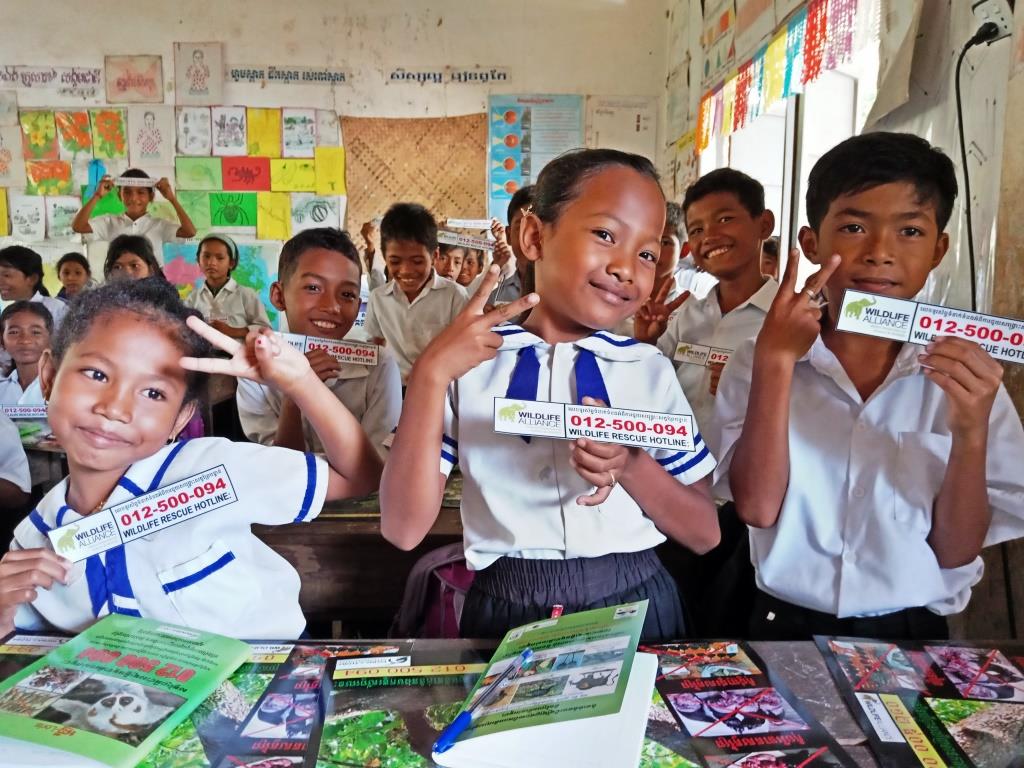
Education standards in Cambodia are among the poorest in the Asia/Pacific region with adult literacy at only 64% and rural literacy even lower. Many rural families subsist on scarce natural resources, many living below the poverty line. With an increasing population, competition for resources between humans and wildlife will become increasingly confrontational if rural populations do not become more aware of the needs and importance of wildlife and the environment. Wildlife Alliance's educational strategy during 2007-2009 was to increase understanding of wildlife conservation by focusing on the delivery of an education curriculum in the form of a modular program focusing on four areas on environmental education:

"During the three-day, two-night excursions, children visit the rescue center, where they meet our rescued Asian elephants and other wildlife; this includes the newest elephant ambassador, Chhouk."

  • Habitat Protection
  • Wildlife Protection
  • Pollution Prevention and Sustainable Livelihoods
  • Watersheds

In 2010, a new area to the curriculum is being introduced: Climate Change Adaptation and Mitigation 

image

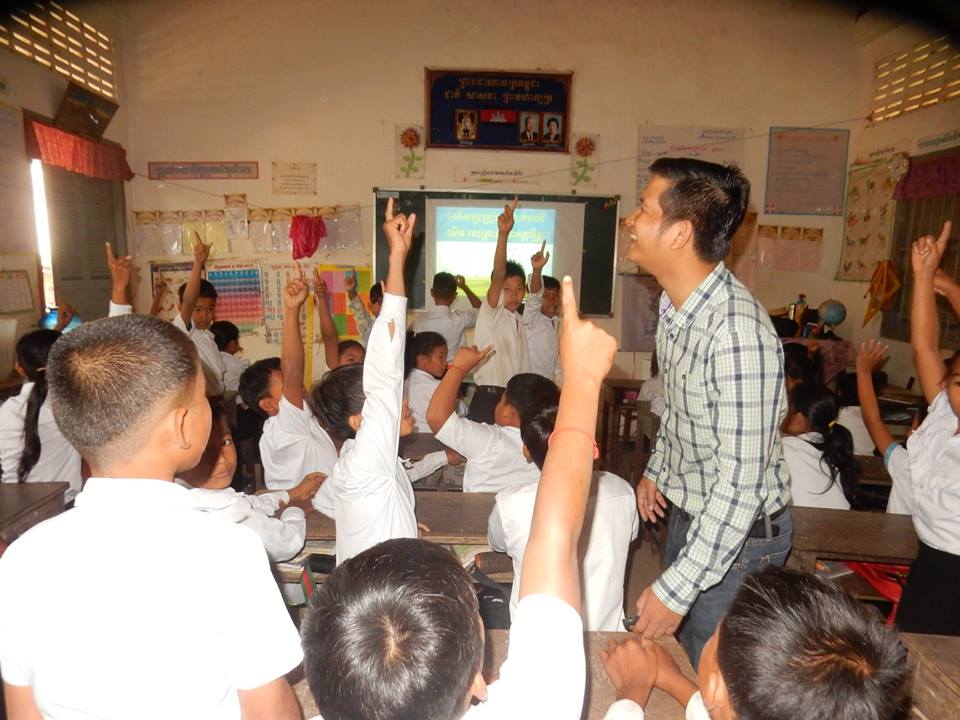
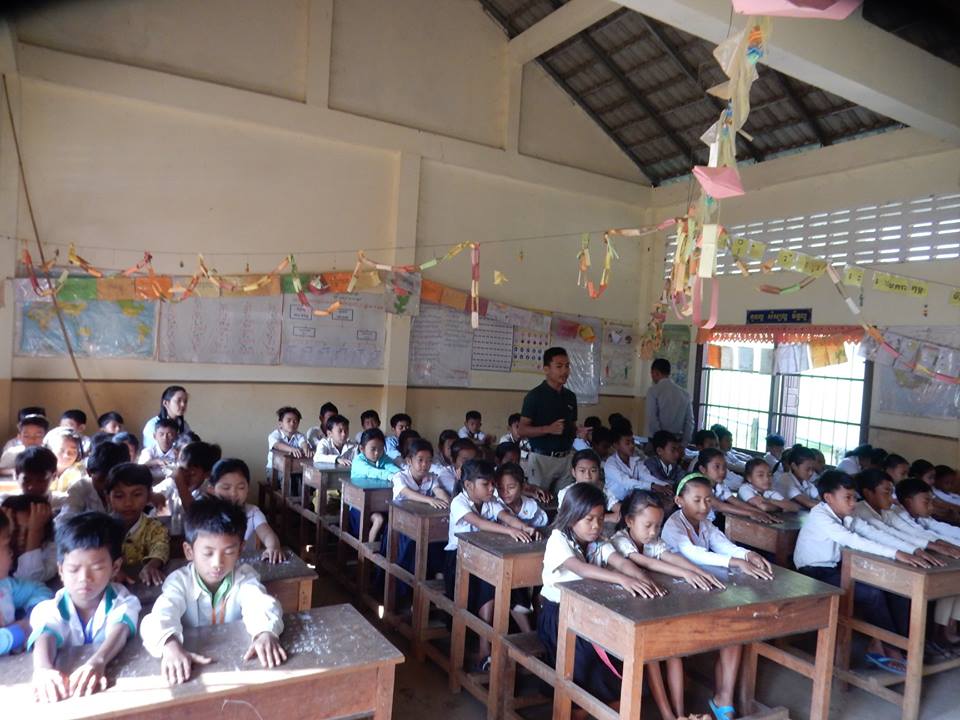
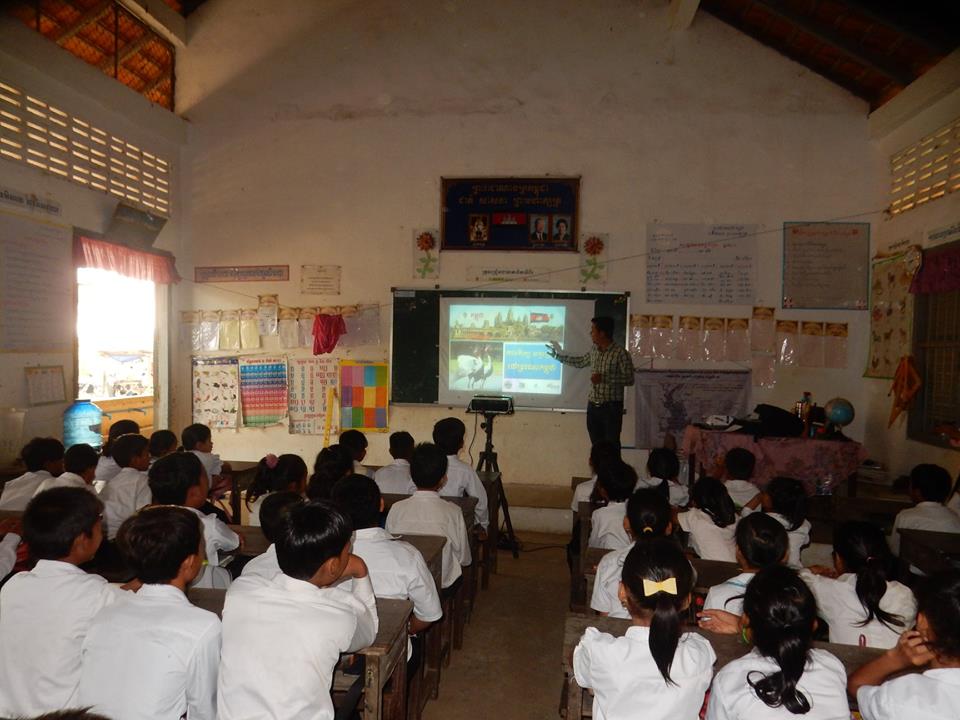
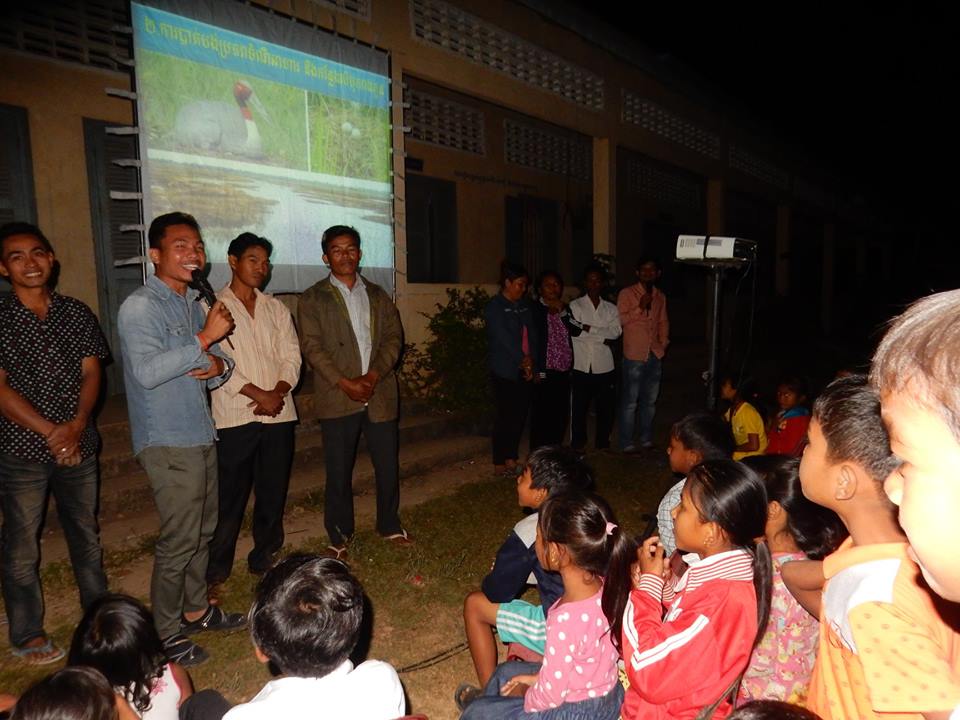
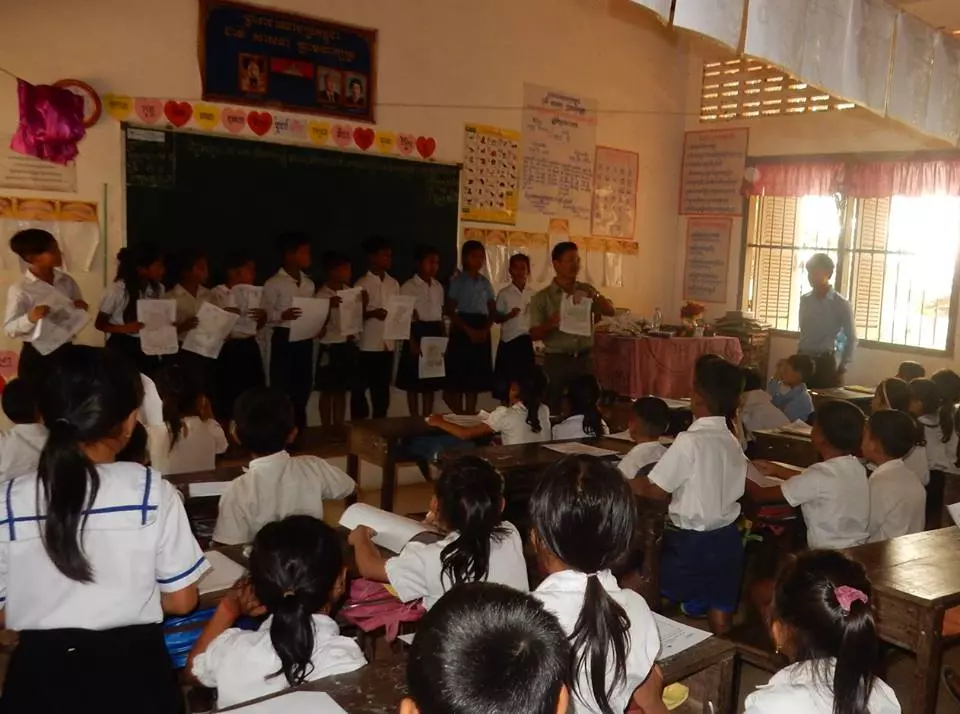
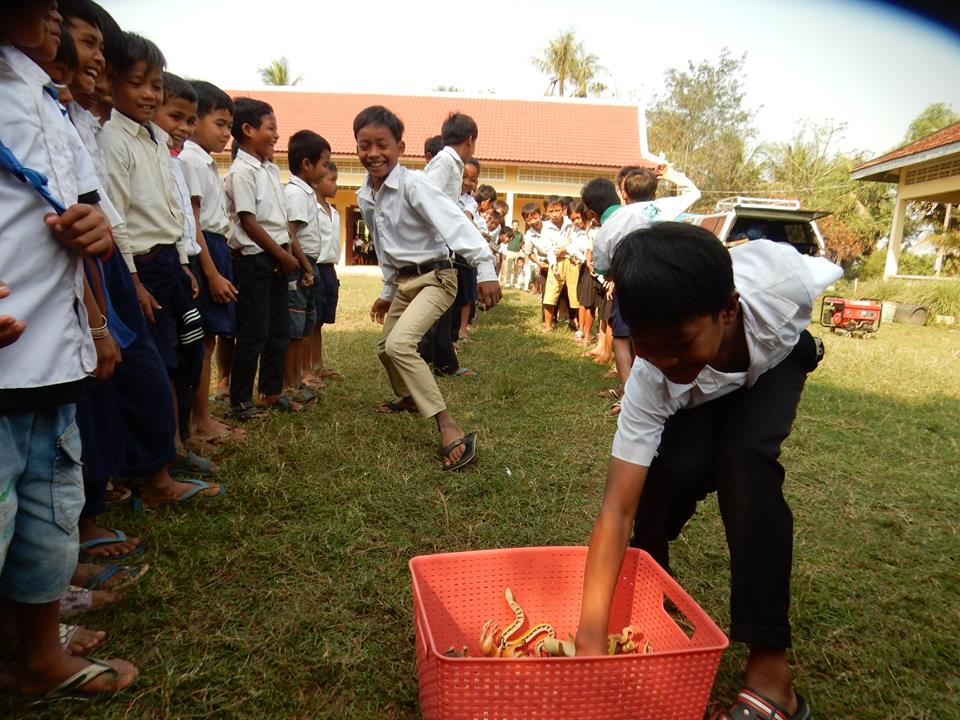
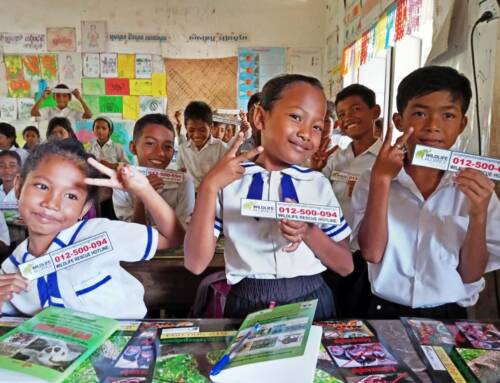
Since 2005 Wildlife Alliance's Cambodia Conservation Education Program has reached more than 50,000 children and adults and provided schoolteachers in rural Cambodia with world-class environmental education curricula. The Kouprey Express theme for 2007-2009 was Our Forest, Our Future; this theme will be retained for the 2010-2013 program. This education program was delivered through films, presentations, classroom exercises, interactive performances, and question-and-answer sessions and interactions with wildlife.

Wildlife Alliance has focused on providing education to the young school children of the Southern Cardamom Mountains as the target group for environmental education campaigns. These campaigns are focused on conservation and sustainable management of the remaining wildlife population and on habitat preservation. The decision to focus on these areas, both educational and demographic, was based on IUCN information, which identifies the Cardamoms mountains of Southwestern Cambodia as a stronghold of several endangered and or critically endangered fauna and flora species. Furthermore, the IUCN has for identified education, both the education of local people and the education of school children, highly in terms of measures of Conservation Effectiveness for many species, such as tigers (IUCN Redlist).

The aim of the 2010–2013 program is to ensure improved cost effectiveness with regards to the delivery of a quality environmental education program. The aim of the improvements is to:

"Children learn about the diet of each animal, habits, and habitat needs, threats, and plight of several key spices, through educational materials previously funded by International Elephant Fund and other donors."

  • R.
    • each as many schoolchildren as possible within Koh Kong Province within a four-year time frame. This is seen as a project priority to ensure the KE project is in line with  Wildlife Alliance's core goals. Furthermore, this priority is required to ensure maximum effectiveness of the KE project with regards to the dissemination of information to ensure survival of threatened species. Urgency is required with regards to delivery of the education program, evident by the rapid decline of the population densities of endemic species over the past 20 yearsImprove teacher training by providing a Ministry of Education with approved teacher training program, developing lasting institutional capacity, training support, and a lasting educational program.
    • Provide appropriate and lasting educational resources to under-privileged rural schoolchildren.
    • Maximise the KE resource allocation to ensure effective delivery of Wildlife Alliance's educational program by focusing on resource and time management.

    Environmental Education Projects

    Kouprey Express. Wildlife Alliance launched the acclaimed Kouprey Express mobile education center to teach Cambodian villagers of wildlife and forestry laws and help them manage their resources while protecting high-biodiversity areas in rural Cambodia including villages, schools, and community centers.

    Who
  • Printer Friendly
    Send to Friend
    Powered by Convio
    nonprofit software