


In O’Som commune, where Thorn Khak grew up, about 80% of people still rely on farming, and in the past many families needed to clear new land to do it. Today he is the commune’s agriculture officer, helping farmers get more from the land they already have.
His path, from a village in Pursat province to a university in Phnom Penh and back to his commune, is one of 25 supported by the Southern Cardamom REDD+ Scholarship Program since 2021. It shows how investing in young people can help protect forests and strengthen the communities that live beside them.
Fertile land, hard livelihoods
In the Southern Cardamom REDD+ project area, most families live from farming and from forest products. The land is fertile, but making a living is not easy. Students from the project communities describe vegetables that grow well but sell for low prices, few reliable buyers, and roads that have only recently improved.
“Even though we can grow vegetables successfully, we often struggle to find markets to sell our products,” says Va Sreylik, a scholarship student studying agriculture. For some families, that pressure has meant clearing forest for new farmland.
That is changing. Thorn Khak says people are becoming less dependent on clearing new land since the REDD+ project began, and the practice has decreased as more people farm their existing land.
Investing in people, not only protection
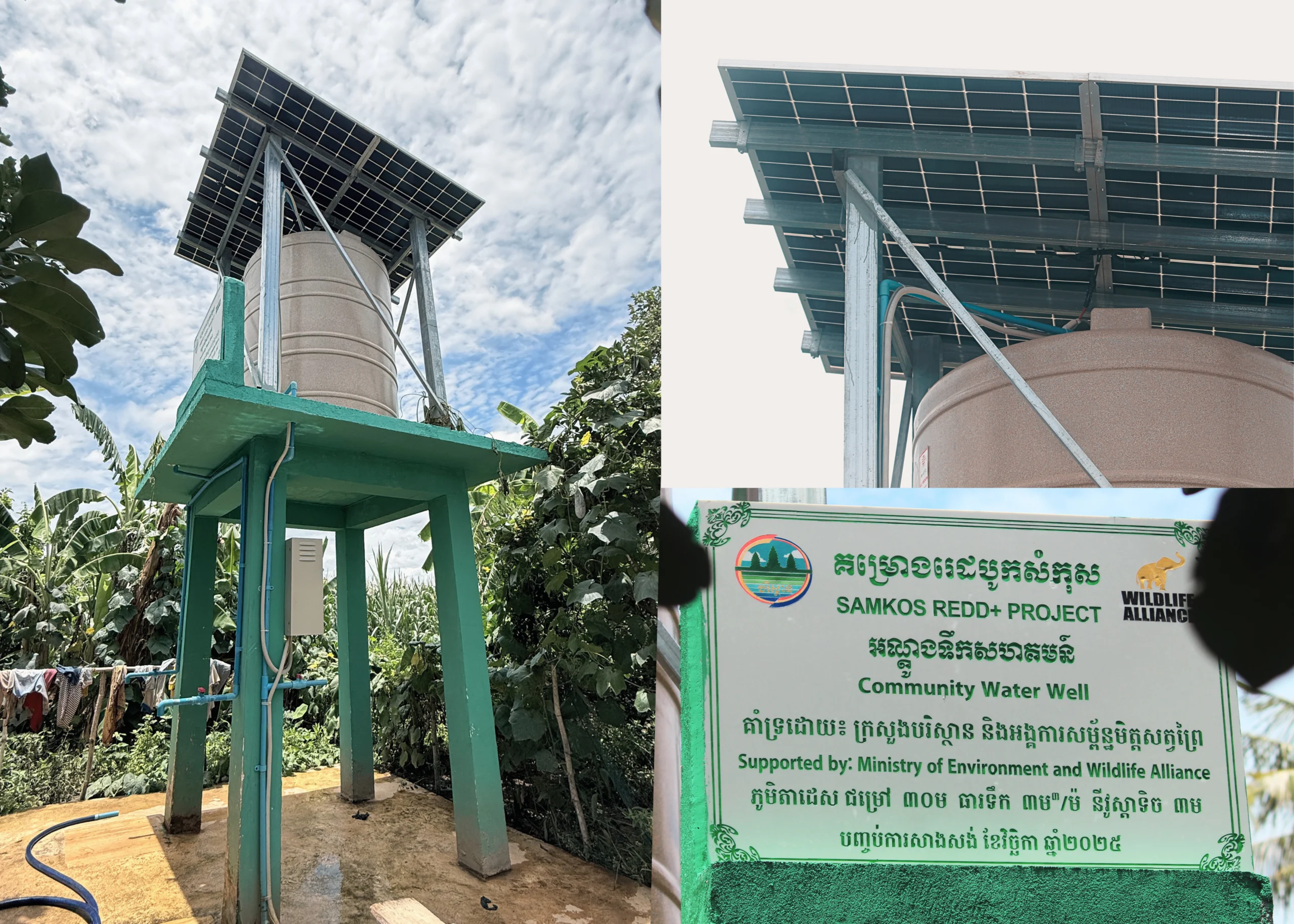
The Southern Cardamom REDD+ Project is a partnership between the Ministry of Environment and Wildlife Alliance. Beyond protecting forest, it supports sustainable livelihoods in 29 project communities.
The scholarship program is built on a simple idea: if young people from these communities get a good education, they can lead the development of their own communities in the future. Students receive paid tuition to a four-year bachelor’s degree at partner universities in Phnom Penh and four years of English classes. The program also covers housing, a monthly living allowance, study materials, health insurance and uniforms, so that students from remote villages can focus on learning.
“I want to share agricultural knowledge and technical skills that can help farmers improve soil quality and increase productivity on their existing land. In this way, they can continue farming without needing to cut down more trees.” Thorn Khak, Communal Agriculture Officer, O’Som commune said.
From the classroom back to the commune
Thorn Khak graduated in agricultural science in 2025 and now works directly with farmers through the Ministry of Agriculture, Forestry and Fisheries. His goals are practical: connect farmers with markets, help them work together in production and marketing, and support agreements with buyers so they can sell reliably and at better prices. When farmers can keep soil productive and earn more from existing land, he says, they have less reason to clear new areas.
Va Sreylik, who is still studying, plans to return to her community after graduating to teach farmers how to make organic fertilizer and improve how they raise livestock.
“With better agricultural knowledge, farmers can reduce their production costs and increase their income without having to clear more forest land,” she says.
The scholarship also supports students in other fields. Heng Hom, who is studying public administration, wants to help neighbors who struggle to understand official documents, agreements and procedures. He also hopes to encourage families to explore other ways of earning income, such as improving vegetable farming or finding other work, so that people can support themselves without clearing more forest.
A promise to give back
Every scholarship student signs a Letter of Commitment. After graduating, they are free to work anywhere. But within three years, each graduate agrees to start a project or bring an idea that benefits people in their home community and the natural resources, wildlife and forests around it. Wildlife Alliance follows up with each graduate during this time.
On 6 November 2026, Wildlife Alliance celebrated 11 students from the program who completed four years of university. They studied subjects from medicine and accounting to agriculture, tourism, IT and natural resource management. Their communities need all of these skills.
Impact so far
- 25 young people from the project communities supported since 2021
- 15 villages in 11 communes where scholarship students come from, across Koh Kong, Pursat and Kampong Speu
- 16 graduates across three batches so far, including 11 celebrated on 6 November 2026
A people-centered approach to REDD+
Protecting a forest takes more than patrols. Families also need a way to earn a living that doesn’t depend on clearing more land, and people nearby who know how to make that work. This is where education comes in. Thorn Khak advises farmers on soil and markets. Va Sreylik plans to teach families how to make their own fertilizer. Heng Hom wants to help his neighbors understand the paperwork they are asked to sign.
For the Southern Cardamom REDD+ Project, the scholarship is a long-term bet on local people. The first results are already showing up in commune offices, on farms and in conservation teams, where graduates are working close to home.



Leave A Comment